
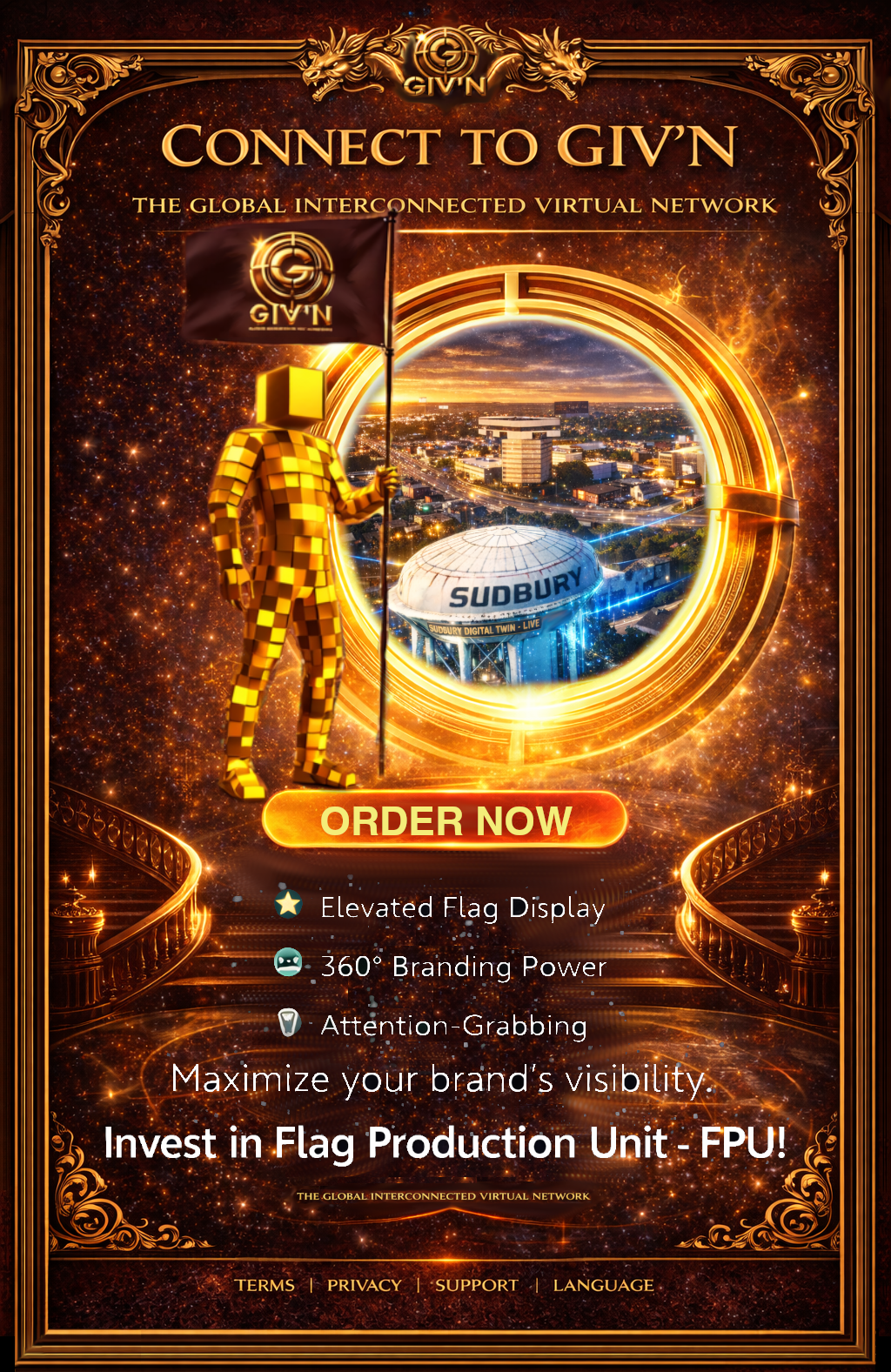
FLAGSHIP PROGRAM
Community Empowerment Model
CA$1000.00
FLAGSHIP PROGRAM
Client-Owned Flag Production Unit (FPU)
The Foundation of Ownership Inside GIV’N
Step beyond platforms, services, and short-term projects.
The client-owned Flag Production Unit (FPU) is the core ownership structure within the GIV’N (Global Interconnected Virtual Network).
This is not a service you hire.
It is infrastructure you operate.
An FPU grants you licensed authority to build, grow, and monetize a permanent digital territory inside a connected virtual universe.
What an FPU Represents
A Flag Production Unit is a licensed, non-equity, revenue-enabled operating unit within the GIV’N Platform.
Your FPU is:
A recognized stake in the GIV’N ecosystem
A branded operational territory, not just virtual space
A foundational asset you build upon over time
You are not buying exposure.
You are securing position.
What You’re Getting
When you acquire an FPU through SudburyFilms.com, you gain:
Long-term operational rights inside GIV’N
Authority to publish, host, and monetize content
A permanent destination within global portal navigation
Eligibility to integrate digital twins, portals, and creators
Infrastructure that scales with usage, culture, and traffic
The exposure value of an FPU grows through activity, relevance, and connection.
What You Can Build with an FPU
An FPU enables you to operate real digital infrastructure, including:
Virtual venues and theatres
Festivals, networks, and cultural hubs
Educational and training environments
Media distribution and live-event ecosystems
Institutional or municipal digital presence
Your FPU is a container for worlds, creators, and commerce.
GIV’N Ownership Model (Why FPUs Matter)
GIV’N is not based on speculative land sales.
Ownership is established through licensed operation and contribution.
FPUs:
Create scarcity through its defined Territories
Anchor long-term development and discovery
Enable revenue without equity dilution
Align infrastructure growth with cultural value
This is utility-based digital real estate.
Licensed Territory (Your Domain)
Each FPU includes a Licensed Territory, defining where and how your unit operates:
Geographic (city, region, country)
Civic, cultural, or institutional
Fully digital or hybrid physical–virtual
Territories establish clarity, recognition, and strategic positioning inside the GIV’N Network.
Integrated by Design
Your FPU can connect seamlessly with:
GIV’N Portals (navigation and access points)
Digital Twin environments
Live and on-demand events
Cross-territory discovery and traffic
Future GIV’N systems as the platform expands
FPUs are designed to compound value, not reset each project.
Built for Operators, Not Speculators
FPUs are designed for:
Cultural entrepreneurs and producers
Studios, festivals, and media organizations
Educational institutions and training providers
Municipalities and destination managers
Creators building long-term ecosystems
If you plan to build, host, and grow—this is your foundation.
Long-Term Opportunity
As GIV’N expands:
Portal traffic increases
Territories gain strategic relevance
Early FPUs anchor future development
Network effects amplify active units
You are not buying a moment.
You are securing infrastructure inside a growing universe.
Own a Flag Production Unit.
Secure your territory.
Build digital infrastructure.
Participate in the GIV’N economy.
This is how virtual ownership becomes operational reality.
Additional Information
The following details provide clarity on how Flag Production Units operate, what is included, and how FPUs are managed within the GIV’N ecosystem.
Licensing Structure
FPUs are licensed, non-equity operating units within the GIV’N Platform
Acquisition grants operational rights, not platform ownership or equity
Licenses are issued per FPU and tied to a defined Licensed Territory
Terms and renewal conditions are outlined at onboarding
This structure ensures stability while preserving platform integrity.
Governance & Platform Standards
FPUs operate independently but must adhere to GIV’N platform standards
Content and activities must align with applicable laws and community guidelines
GIV’N reserves platform-level governance to maintain interoperability and trust
FPUs retain creative and operational control within approved scope
This balance enables autonomy without fragmentation.
Territory Availability & Scarcity
Licensed Territories are limited and issued on an availability basis
Overlapping territories may be restricted to protect value and clarity
Territory scope is confirmed prior to activation
Expansion requests are evaluated based on performance and demand
Scarcity is intentional to preserve long-term value.
Revenue & Monetization
FPUs may monetize content, events, access, and experiences
Revenue models are selected and implemented by the FPU operator
Platform-level transaction infrastructure may be provided where applicable
Financial operations remain the responsibility of the FPU holder
FPUs are designed for real economic activity, not passive holding.
Integration & Expansion
FPUs may integrate with additional GIV’N components, including:
Portals and navigational access points
Digital Twin environments
Live and hybrid event systems
Educational and institutional frameworks
FPUs are built to scale through integration, not replacement.
Support & Onboarding
Initial onboarding and territory activation included
Documentation and operational guidance provided
Optional strategic, technical, or production support available
Ongoing platform upgrades handled at the GIV’N level
Support is structured to enable independence, not dependency.
Transferability & Succession
FPUs are not freely transferable without platform approval
Changes in operational control require review and authorization
Succession planning may be accommodated under defined conditions
This protects ecosystem continuity and value.
Policies & Compliance
FPUs must comply with all applicable local, regional, and digital regulations
Privacy, IP rights, and content responsibility rest with the FPU operator
Platform policies may evolve as the network grows
Options & Variants
Flag Production Units (FPUs) are available in multiple configurations. Each selection creates a unique, managed variant with its own scope, availability, and operational controls.
Territory Scope (Size)
Defines the geographic or digital reach of the FPU.
Local
Single venue, organization, or city districtRegional
City-wide, regional, or multi-venue operationNational
Country-level Licensed TerritoryGlobal / Digital-Only
Non-geographic, platform-wide digital territory
Operational Focus (Use Type)
Determines the primary function of the FPU.
Cultural & Arts
Film, performance, festivals, exhibitionsMedia & Distribution
Streaming, publishing, content networksEducation & Training
Institutional learning, workforce developmentMunicipal / Institutional
Civic engagement, tourism, public infrastructureCommercial / Hybrid
Multi-use operational models
Integration Level (Infrastructure Depth)
Controls how deeply the FPU connects to the GIV’N ecosystem.
Core FPU
Standalone operating unit within GIV’NPortal-Enabled
Includes navigational portals and discovery accessFully Integrated
Connected to portals, digital twins, live systems, and events
Licensed Term (Duration)
Defines the operational licensing period.
Foundational Term
Initial activation and setup periodAnnual License
Renewable yearly operationMulti-Year Strategic License
Long-term institutional or regional deployment
Capacity & Scale
Specifies operational capacity limits.
Single-Operator
One managing entityMulti-Creator
Supports multiple creators or partnersInstitutional Scale
Large teams, departments, or public users
Optional Add-Ons
Selectable per variant:
Digital Twin integration
Live and hybrid event infrastructure
Branded portals and interfaces
Monetization and access systems
Strategic onboarding and consulting support
Variant Management Notes
Each option combination generates a distinct FPU variant
Variants can be priced, approved, activated, or retired independently
Territory, capacity, and integration are controlled at the variant level
Designed for scalability and long-term governance
© 2026